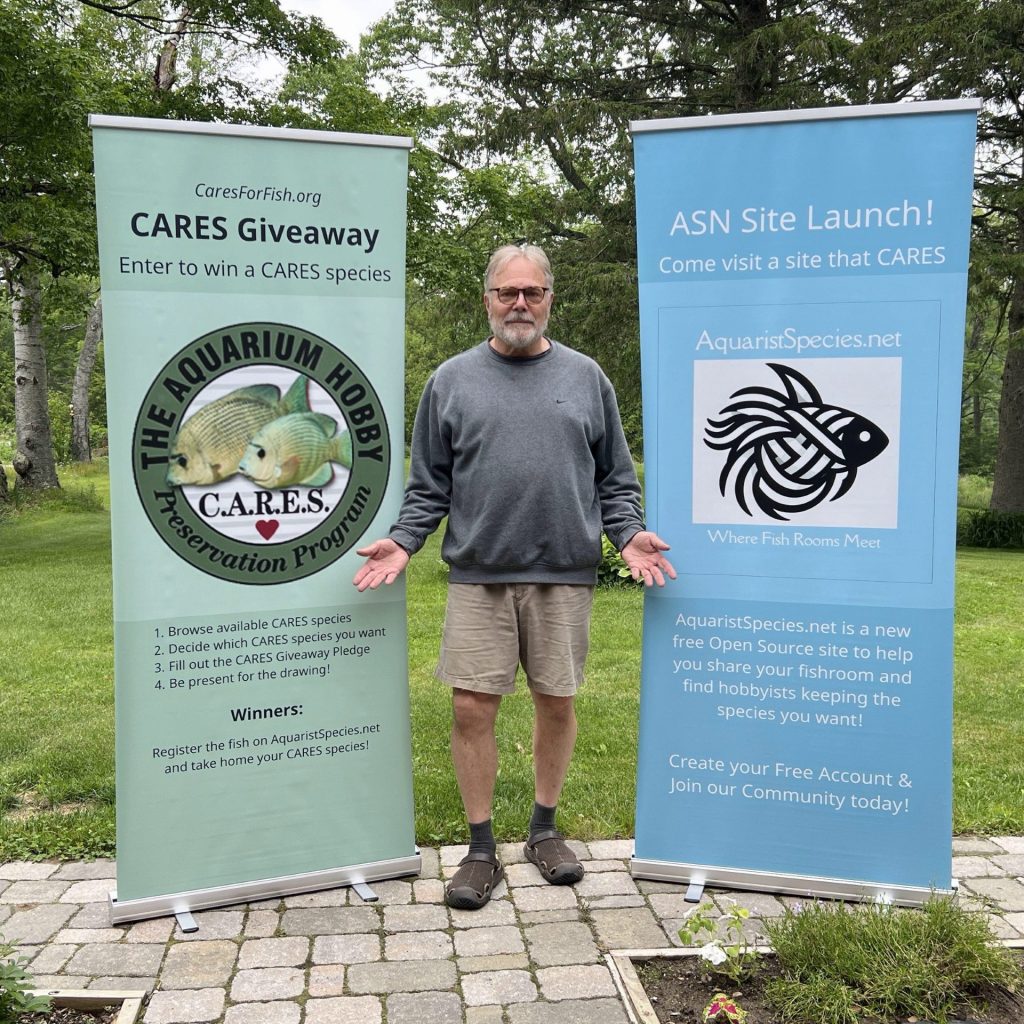
Craig Storms has been an aquarium hobbyist since he was 10 years old and his parents supported building his first fishroom in their basement, which held 10 tanks on wrought iron stands and was shared with his brother. From the very beginning he took a special liking to cichlids with fond memories of a pair of Pelvicachromis pulcher─the ever popular kribensis─digging out a cave and preparing to spawn. He’s been keeping mostly cichlids ever since and currently favors the shell dwellers of Lake Tanganyika, cool water tolerant cichlids of Uruguay, and CARES species from Lake Victoria and Central America. Most recently wild bettas have found their way into his fishroom including his current favorite, the mighty dragon-like Betta antutua.
Craig enjoyed a rewarding career in software development, which recently merged with his aquarium hobby and led to the development of AquaristSpecies.net, an open-source site focused on helping aquarists network and find one another based on the species they keep. Living in New England, he naturally gravitated to the New England Cichlid Association where he heard stories of rare and endangered fish coming into the hobby and getting ‘lost’ as hobbyists kept species for a while and then moved on, distributing them through local auctions and swaps. Craig developed AquaristSpecies.net with an eye for helping to solve this hobbyist networking challenge and a particular focus on supporting CARES species. In 2024 he applied for a Paul V. Loiselle Conservation Fund grant to support this work. The grant was approved, funding the cost of servers for the site for two years. The site embraces CARES by clearly calling out species listed in the CARES program and enabling hobbyists to share photos and notes on how they keep and maintain the species they keep. It also provides a helpful means of tracking aquarists keeping CARES species. This site is a free, open-to-the-public, crowd-sourced solution.
CARES is so grateful for the work Craig is doing through the development of AquaristSpecies.net to track our data and provide a means to share the conservation priority fish we are maintaining!